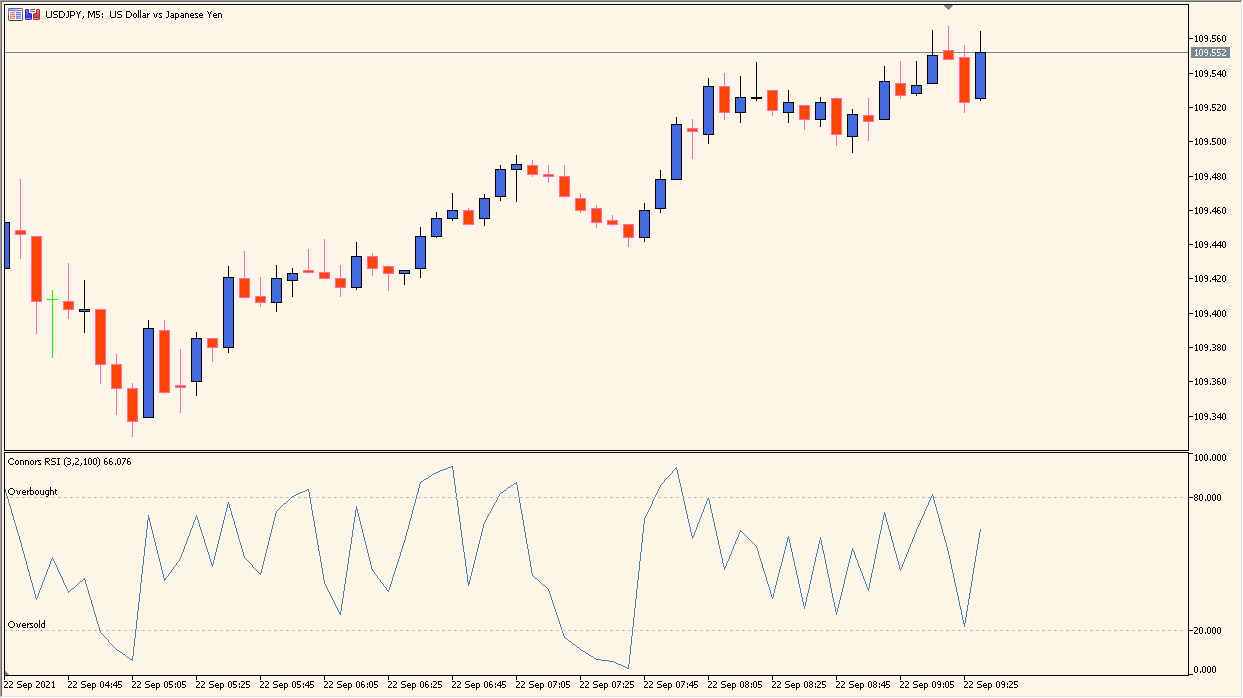
Overview of the Connors RSI Indicator
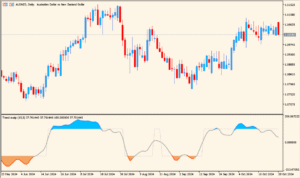
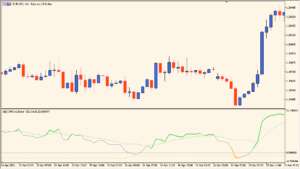
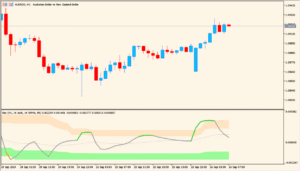
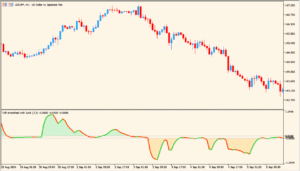
The Connors RSI indicator combines three components — a short-term RSI, a streak-based momentum measure, and a percentile ranking of recent price changes. This combination provides a more sensitive and responsive oscillator compared to the standard RSI. It is designed to highlight overbought and oversold market conditions with greater precision, making it useful for traders looking for short-term entry and exit opportunities.
By blending momentum, duration of price moves, and relative ranking, the indicator seeks to capture short-term reversals more effectively than traditional oscillators.
How to Use It in Practice
In live trading, you can use the Connors RSI to:
- Identify overbought levels when the indicator rises above the threshold, signaling potential reversals.
- Spot oversold levels when the indicator falls below the threshold, highlighting potential buying opportunities.
- Time short-term trades more accurately compared to standard RSI.
- Combine with trend filters or support/resistance zones for higher probability setups.
This makes it a flexible tool for traders who rely on momentum and reversal signals in fast-moving markets.
Parameter Explanations
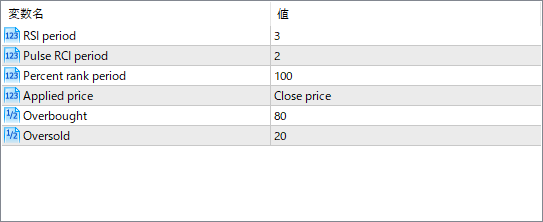
RSI period
Defines the lookback period for the short-term RSI component, affecting its sensitivity to price changes.
Pulse RCI period
Specifies the streak length calculation, measuring consecutive up or down closes to capture short-term momentum shifts.
Percent rank period
Determines the number of bars used to rank today’s price change relative to recent history, adding a comparative strength element.
Applied price
Sets which price type (e.g., close, open, high, low) is used in the calculations.
Overbought
Defines the upper threshold level where the market may be considered overbought and due for a correction.
Oversold
Defines the lower threshold level where the market may be considered oversold and due for a bounce.