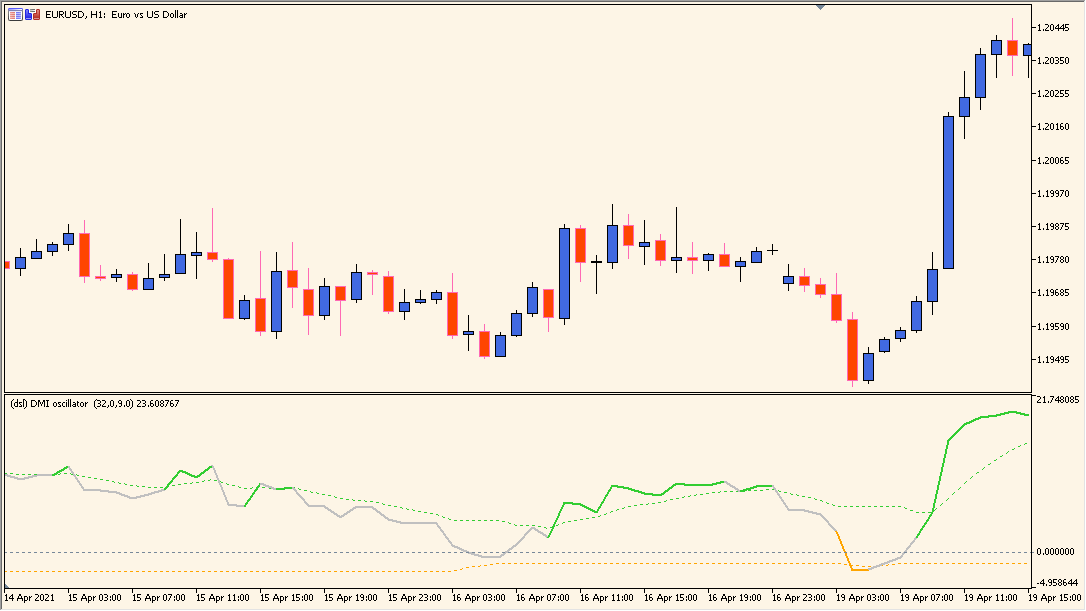
Overview of the Indicator
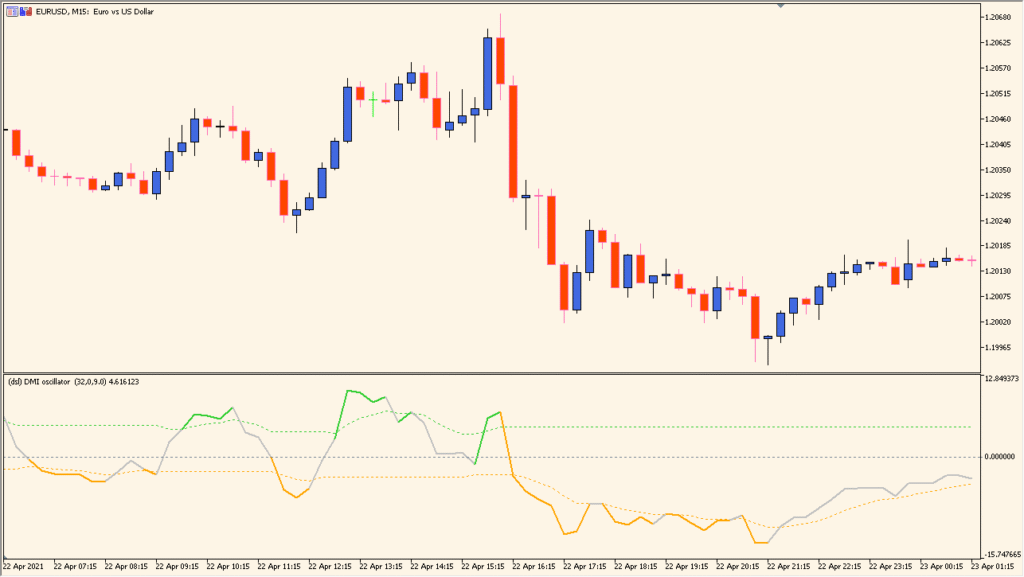
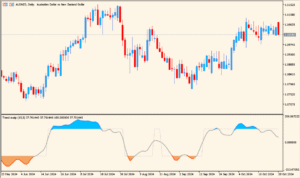
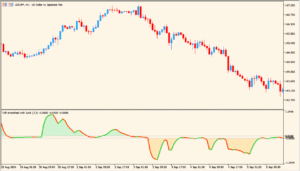
dsl-dmi-oscillator is a momentum indicator based on the Directional Movement Index (DMI). It transforms the traditional DMI values into an oscillator format, making trend strength and directional bias easier to read in a subwindow.
By applying smoothing methods, the indicator reduces noise and highlights sustained bullish or bearish pressure. It helps traders judge whether buyers or sellers are in control and how strong that control is.
How to Use It in Practice
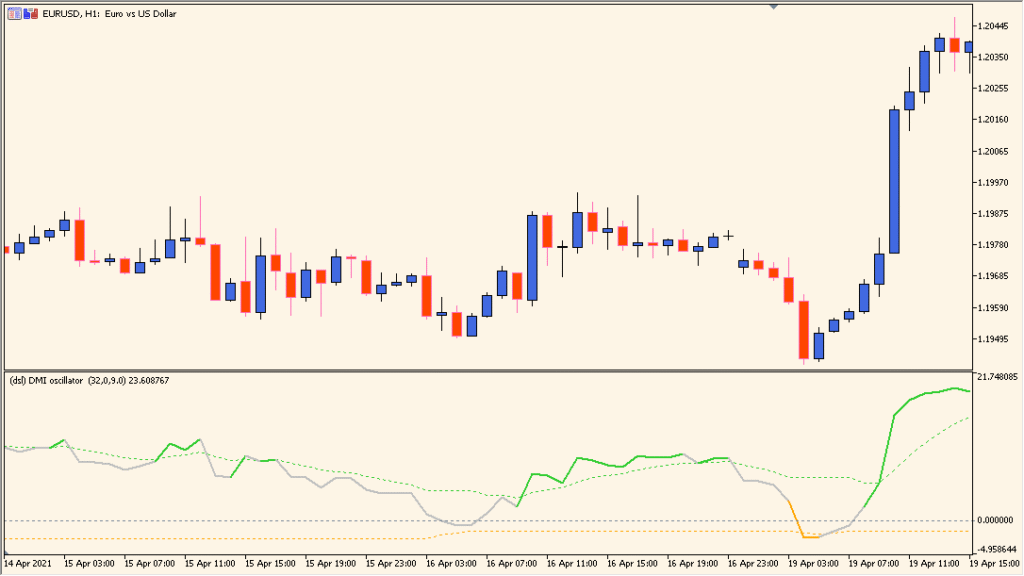
In practical use, this oscillator can support trend-following and momentum-based strategies.
- Look for moves above the zero line to confirm bullish strength.
- Look for moves below the zero line to confirm bearish pressure.
- Use crossovers with the signal line to identify potential entry timing.
- Watch for divergence between price and the oscillator as a possible early reversal sign.
It works well when combined with price structure or support and resistance levels.
Parameter Explanations
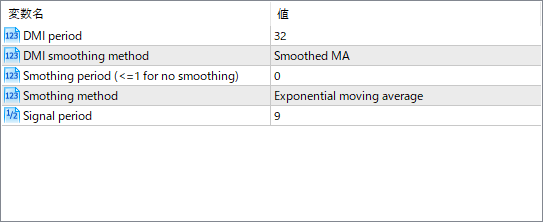
DMI period
Defines the number of bars used to calculate the Directional Movement Index. A larger period smooths the movement and focuses on longer trends, while a smaller period reacts more quickly to short-term changes.
DMI smoothing method
Selects the smoothing technique applied to the DMI calculation. Different methods affect how stable or responsive the oscillator appears.
Smoothing period (<=1 for no smoothing)
Controls additional smoothing applied to the oscillator. When set to very low values, smoothing is minimal. Higher values reduce noise but increase lag.
Smoothing method
Specifies the moving average type used for the extra smoothing layer. This changes how quickly the oscillator adapts to market shifts.
Signal period
Sets the period of the signal line. A shorter period provides faster cross signals, while a longer period offers more stable but slower confirmations.