Indicator Overview
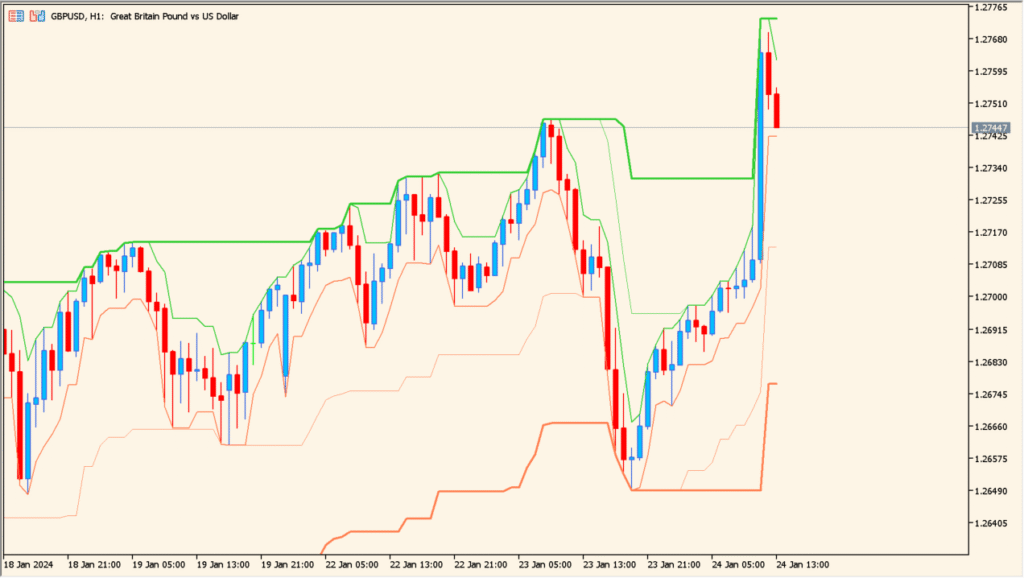
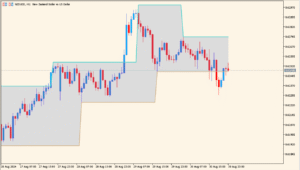
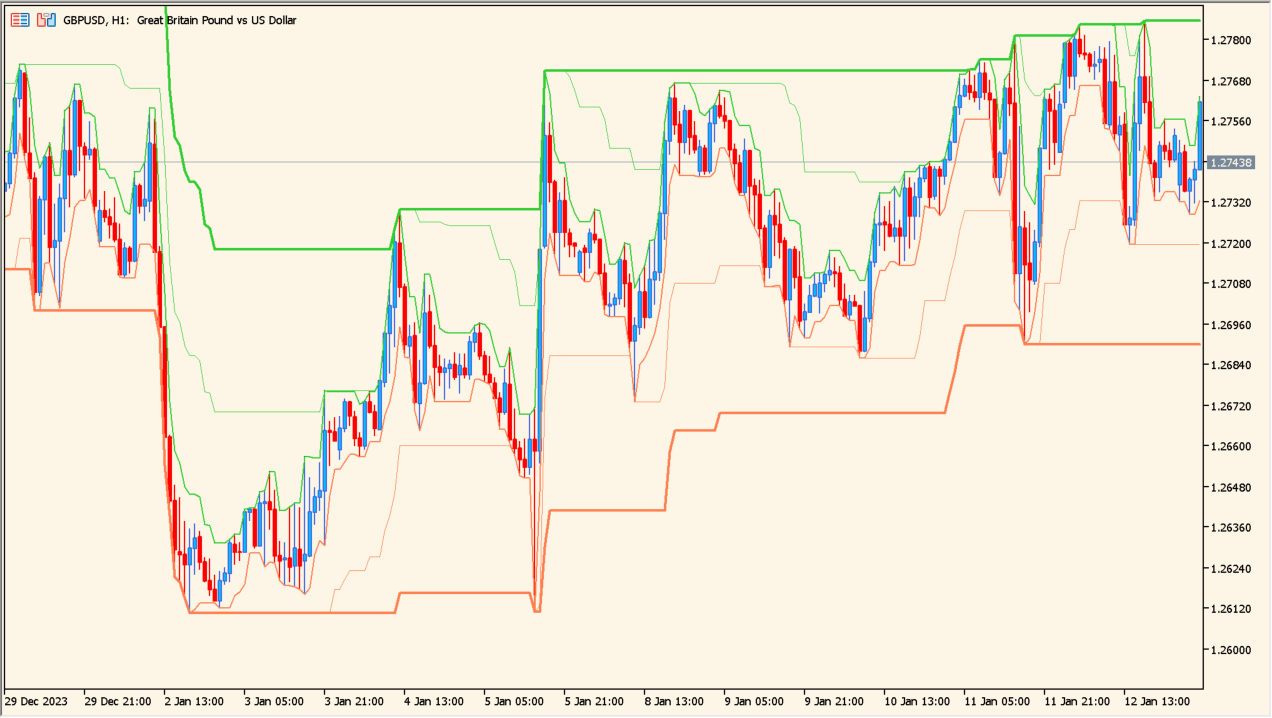
Limit channels is an ATR-based indicator that draws dynamic upper and lower limit lines around price. These lines expand and contract with volatility, creating adaptive channels that reflect current market conditions. The structure is step-like, updating only when price makes meaningful progress, which helps reduce noise.
The indicator is designed to highlight trend direction and potential pullback zones rather than exact entry signals. It visually separates trending phases from consolidation by showing how price behaves relative to the ATR limits.
How to Use It in Practice
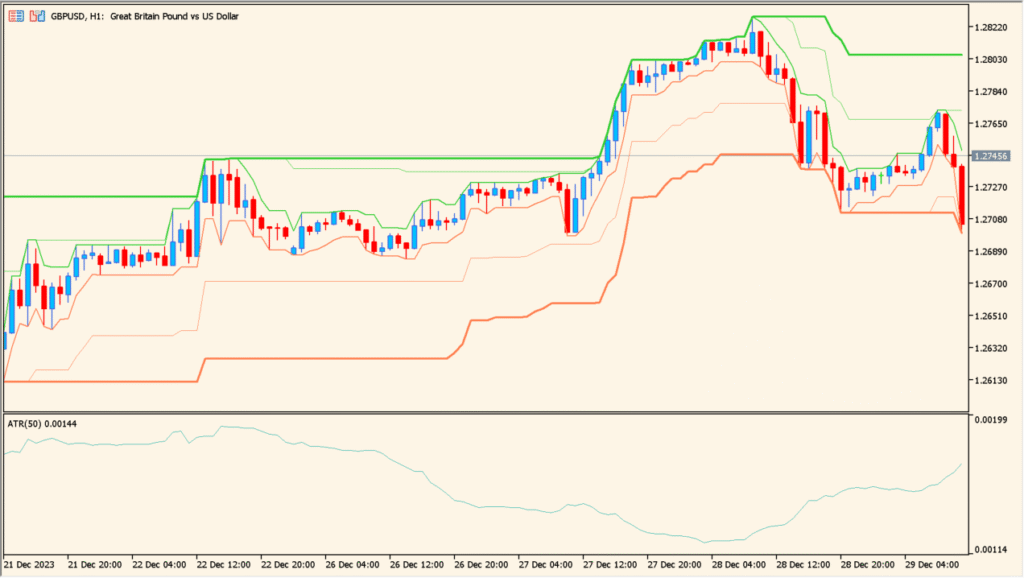
In practical trading, Limit channels can be used in the following ways:
When price stays above the lower limit and continues to print higher steps, the market is in a stable uptrend. Pullbacks toward the lower channel often act as continuation zones rather than reversal points.
In downtrends, price tends to respect the upper limit, with rallies failing near that boundary. This makes the upper channel useful for managing short positions or identifying trend weakness.
If price frequently crosses both limits and the channel flattens, it usually signals a range or low-momentum environment where trend-following strategies become less effective.
Parameters
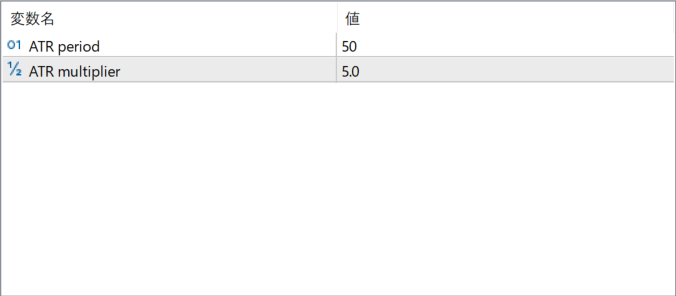
ATR period
Defines the number of bars used to calculate the Average True Range. A longer period smooths volatility and produces more stable channels, while a shorter period makes the limits react faster to recent price changes.
ATR multiplier
Controls how far the upper and lower limits are placed from price based on ATR. Higher values create wider channels and fewer adjustments, while lower values tighten the channel and make it more sensitive to price movement.