Indicator Overview

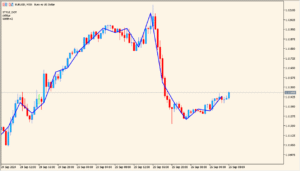
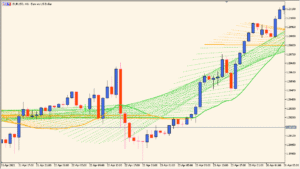
The t3-std-adaptive indicator is an adaptive trend-following tool based on the T3 moving average concept. It is designed to smooth price action while remaining responsive to changes in market conditions. By adjusting its behavior dynamically, it aims to reduce lag during strong trends and avoid excessive noise during consolidation.
The line changes color depending on trend direction, making it easy to visually identify bullish and bearish phases directly on the price chart.
How to Use It in Practice

In practical trading, this indicator can be used in several straightforward ways:
- Use the slope of the line to confirm the overall market trend.
- Look for color changes as early signals of potential trend shifts.
- Trade pullbacks in the direction of the active trend, using the line as a dynamic guide.
- Combine it with oscillators or price action to filter false signals in ranging markets.
Because it adapts to volatility and momentum, the indicator works well on both intraday and swing trading timeframes.
Parameters

T3 Calculation period
Defines the base period used for calculating the T3 smoothing. Longer periods result in smoother lines, while shorter periods increase responsiveness.
T3 hot value
Controls the level of smoothing versus responsiveness in the T3 calculation. Higher values make the line smoother, lower values make it react faster to price changes.
T3 original Tillson calculation?
Enables or disables the original Tillson T3 formula. When enabled, the indicator follows the classic T3 behavior more closely.
Price to use
Selects which price value is used for calculations, such as Close or other available price types.
Period for adapting
Sets the lookback period used for the adaptive logic. This affects how quickly the indicator adjusts to changing market conditions.
Color down
Specifies the line color when the indicator is signaling a bearish or downward trend.
Color Up
Specifies the line color when the indicator is signaling a bullish or upward trend.
Color steps for drawing
Controls how smoothly color transitions are drawn along the line. Higher values produce finer color gradients.